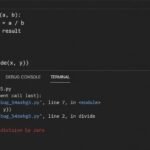

Encountering an unfamiliar error code can make Python debugging difficult, especially when the message contains a strange string such as Python bug 54axhg5. Developers often search for unusual identifiers when a program crashes, a script stops responding, or a software environment behaves unexpectedly. However, not every technical-looking string represents a documented Python bug or an official error code.
Python is a widely used programming language for web development, automation, data analysis, artificial intelligence, and software testing. Like any programming language, it can experience errors caused by faulty code, incompatible dependencies, incorrect settings, and resource limitations. Understanding the source of a problem is more useful than assuming that an unfamiliar identifier points to a known defect.
This guide explains what Python bug 54axhg5 might represent, how to investigate it responsibly, and which troubleshooting techniques can help. You will also learn how to identify misleading technical terms, resolve common environment problems, and use reliable documentation to make informed debugging decisions.
The Reality Behind the Name
The first step in investigating Python bug 54axhg5 is to establish whether it refers to a documented software issue. The string alone does not provide enough information to identify a specific Python exception, interpreter defect, or officially tracked bug. Without a reproducible example, an error message, or a reliable source linking the identifier to a known issue, it would be inaccurate to claim that it represents a confirmed Python bug.
Python has established ways to report and track interpreter problems. The official Python documentation explains language behavior, exceptions, and debugging tools, while the Python issue tracker provides information about reported defects and development discussions. These resources help distinguish a genuine software problem from an invented label, a private tracking identifier, or a message produced by another application.
Why the Identifier Needs Verification
A string such as 54axhg5 might appear in a third-party application’s logs, a testing platform, a generated report, or a website describing a supposed technical issue. It could also be an internal identifier that has meaning only within a particular project. These possibilities should be investigated rather than treated as established facts.
To verify the name, look for the original source, the complete error message, and the circumstances in which it appeared. Check whether the source links to a Python issue, a software release note, or a documented exception. If no reliable connection exists, describe the problem using the observable symptoms instead of presenting Python bug 54axhg5 as a confirmed defect.
What the String Might Actually Represent
An unfamiliar identifier can have several explanations. It may be a reference generated by a logging system, a test case identifier, a bug number assigned by a private development team, or an arbitrary string inserted into an error report. The format alone cannot establish which explanation is correct.
Python applications often rely on multiple software layers. A program may use the Python interpreter, external packages, operating system services, a database driver, and a web framework. An error displayed by one of these components might be incorrectly attributed to Python itself. Identifying the component that produced the message is therefore an important part of effective troubleshooting.
Application Logs and Internal Identifiers
Logs can contain timestamps, request IDs, session tokens, stack traces, and custom error labels. Some identifiers are generated automatically to help developers connect related events across several services. Others are written directly into application code.
If Python bug 54axhg5 appears in a log, inspect the surrounding entries before drawing conclusions. Search the codebase for the exact string, review the function that produced the message, and determine whether the identifier came from an external library or an internal logging statement.
For example, a project might contain code similar to this:
import logging
logging.basicConfig(level=logging.INFO)
logging.error(“Unexpected application error: 54axhg5”)
This example deliberately logs the identifier as plain text. It does not demonstrate a built-in Python error or prove that an actual defect exists. It shows why the source of a message matters when interpreting unfamiliar technical strings.
Confirming the Actual Failure
The most useful evidence is the behavior that accompanies the identifier. Does the program terminate? Does an import fail? Does a request time out? Does the application return incorrect results? Each symptom suggests a different investigation.
Record the Python version, operating system, package versions, complete traceback, and steps needed to reproduce the issue. Remove passwords, API keys, personal information, and other secrets before sharing logs. This evidence provides a practical starting point for identifying the real cause without relying on an unverified bug name.
Real Problems Often Mistaken for This Phantom Bug
Although Python bug 54axhg5 is not identifiable from the name alone, the symptoms associated with an unfamiliar error may point to genuine programming problems. Common examples include incompatible dependencies, race conditions, memory exhaustion, incorrect file paths, and unexpected input values.
A useful troubleshooting process separates the visible symptom from the suspected cause. For instance, an application that freezes might have a blocked network request, a deadlock, or an infinite loop. These failures can look similar to users even though their technical causes differ.
Dependency and Environment Conflicts
Python projects frequently depend on external packages installed through tools such as pip. A package may require a particular version of another library, while the project uses a different version. The result can be an import error, an unexpected function signature, or a runtime exception.
Virtual environments help isolate dependencies between projects. They reduce the risk that installing a package for one application will disrupt another. However, creating an environment does not automatically resolve every compatibility issue. Developers must still select supported package versions and install dependencies that match the project’s requirements.
Concurrency and Threading Issues
Concurrency problems occur when multiple tasks interact in ways that produce unexpected behavior. Python applications using threads, asynchronous functions, or multiprocessing may experience race conditions, deadlocks, and inconsistent state.
A race condition can happen when two tasks access shared data without appropriate coordination. A deadlock can occur when tasks wait indefinitely for resources held by one another. These problems may appear intermittently, making them difficult to reproduce.
To investigate a suspected concurrency issue, reduce the workload, add timestamps to relevant log messages, and examine shared resources. Use synchronization tools such as locks when threads must coordinate access to mutable state. For asynchronous applications, check whether blocking operations prevent the event loop from making progress.
Memory Management Failures
Memory-related problems can cause a Python program to slow down, terminate unexpectedly, or raise a MemoryError. Common causes include retaining unnecessary objects, loading very large datasets, creating unbounded collections, and repeatedly accumulating cached results.
Python manages memory automatically in many situations, but automatic memory management does not eliminate the possibility of excessive memory use. Objects can remain reachable longer than expected, and native extensions may allocate memory outside the ordinary Python object system.
Start by measuring memory use during a representative workload. Process large files in smaller batches, release references to objects that are no longer needed, and inspect caches for unlimited growth. Tools such as tracemalloc can help identify where Python allocations originate. The goal is to locate the actual source of resource pressure rather than assume that an unfamiliar error code identifies a memory bug.

I am the writer behind PickHives.com, with 4 years of experience sharing simple reflections on everyday blessings. Through my writing, I highlight the beauty in small moments and the power of gratitude.My goal is to create content that feels positive, comforting, and meaningful.